

Top Rated Foot Care for Dryness: 2026 Guide
Table of Contents
- Why Foot Dryness Happens and What Actually Fixes It
- How to Fix Dry Cracked Heels Fast
- Best Ingredients for Dry Foot Skin
- Daily Foot Care Routine for Hydration
- Top Rated Foot Creams for Dryness in 2026
- Diabetic Foot Care and Exfoliation vs. Hydration
- Conclusion
- Frequently Asked Questions
Last Updated: September 12, 2026
Why Foot Dryness Happens and What Actually Fixes It
Foot dryness is a breakdown of the skin barrier that lets moisture escape faster than your body can replace it, and the fix is consistent, targeted foot care for dryness rather than a single heavy application. At Sourir, we hear from customers who have tried expensive creams that never healed their cracks, and the reason is almost always the same: they moisturized once, felt a temporary improvement, and stopped.
The skin on your feet has fewer oil glands than your face and hands, and it takes the daily impact of walking, standing, and tight shoes (peer-reviewed research). That combination strips the outer layer, allows dead skin cells to build up, and eventually produces fissures deep enough to sting. Fixing it means restoring the skin barrier with the right ingredients and repeating that routine often enough for new skin to form.
How to Fix Dry Cracked Heels Fast
Fast repair of cracked heels comes down to softening the hard layer, removing the thickest dead skin, and sealing in moisture overnight. Skipping any one of those three steps is why most at-home attempts stall after a week.
Start with a foot soak in warm water for 10 to 15 minutes to soften the callus. Follow with a gentle exfoliation using a pumice stone or callus remover, working slowly and never filing into a fissure. Then apply a thick moisturizer and cover your feet with socks before bed.
Overnight Treatment That Works While You Sleep
The overnight approach works because occlusion multiplies absorption. Apply a generous layer of cream to damp feet, pull on a pair of cotton socks, and let body heat do the rest over six to eight hours. Many people find that three to four consecutive nights produce visible softening, while occasional use does very little.
When to See a Doctor for Deep Fissures
See a doctor when a fissure bleeds, is painful to stand on, or shows signs of infection such as redness, warmth, or discharge (mayoclinic.org). Deep fissures that reach the dermis will not close with moisturizer alone, and people with diabetes should treat any open foot wound as urgent rather than waiting to see whether it improves.
Best Ingredients for Dry Foot Skin
The best ingredients for dry foot skin fall into three functional groups: humectants that pull water into the skin, emollients that soften and fill the gaps between skin cells, and occlusives that sit on top and stop that water from escaping. The strongest formulas combine all three, which is why a single-ingredient balm often feels good for an hour and then does nothing.
Look for these on the label, and pay attention to where each one sits in the ingredient list, ingredients are listed by concentration, so an active that appears after the fragrance is doing very little work:
- Urea: A humectant and keratolytic at the same time. At roughly 10 percent it hydrates; at 20 percent and above it softens thick callus and helps break down the bonds holding dead cells together. It can sting on open fissures.
- Salicylic acid: Loosens dead skin cells so they shed instead of building into a callus. Common in callus-removal formulas, usually at low single-digit percentages.
- Ammonium lactate and glycolic acid: Alpha-hydroxy acids that smooth rough texture and improve how the skin holds water. Gentler than salicylic acid for most people.
- Glycerin: A workhorse humectant that draws water from the deeper layers of skin to the surface. Cheap, effective, and rarely irritating.
- Shea butter and lanolin: Rich emollients that soften without a greasy finish. Lanolin is the more occlusive of the two and is a common allergen for a small share of people.
- Petrolatum and dimethicone: Occlusives. They do not add water, they trap it. This is the layer that makes overnight sock treatment work.
- Tea tree and aloe vera: Soothing additions that calm irritated skin. Tea tree has mild antimicrobial activity; aloe is a light humectant.
Ingredient Safety and Who Should Avoid Certain Actives
This is the part most buying guides skip, and it is the part that matters most if your skin is already damaged.

- Open cracks or fissures: Skip salicylic acid, glycolic acid, and high-concentration urea until the skin has closed. Acids on broken skin sting, and they slow the healing you are trying to speed up.
- Diabetes or reduced circulation: Check with a clinician before using any strong exfoliating active on your feet. Reduced sensation means you may not feel the sting that would otherwise tell you to stop.
- Sensitive or reactive skin: Patch-test any new acid or urea product on the inside of your forearm for 24 hours before putting it on your heels (the American Academy of Dermatology).
- Fragrance and essential oils: The most common cause of contact irritation in foot creams. If a product burns rather than tingles, the fragrance is usually the culprit.
- Lanolin allergy: Uncommon but real. If you react to wool, read the label before buying a lanolin-heavy balm.
How to Layer Actives Without Over-Treating
A common pattern that works: use an exfoliating active (urea, salicylic acid, or an AHA) two to three nights a week, and a plain humectant-plus-occlusive moisturizer on the other nights. Stacking multiple acids in the same session is what causes the raw, stinging skin people mistake for "the product working." If your heels are actively cracked, drop the acids entirely and run the humectant-plus-occlusive routine every night until the skin closes.
Daily Foot Care Routine for Hydration
A daily foot care routine for hydration takes about two minutes and matters more than any single product you buy. Consistency is what rebuilds the skin barrier; intensity is not.
- Wash and dry feet thoroughly, especially between the toes
- Apply moisturizer while skin is still slightly damp
- Massage in upward strokes from toes toward the ankle
- Wear breathable socks during the day and change them after workouts
- Repeat the heavier overnight treatment two to three nights per week
Application Techniques for Maximum Absorption
Absorption improves when you apply product to damp skin, massage it in rather than letting it sit, and cover the area afterward. Most people apply cream to dry skin and rub it off within seconds. Applying to skin that is still damp from a shower, then sealing with a sock, keeps far more of the product where it can actually work.
Top Rated Foot Creams for Dryness in 2026
The top rated foot care for dryness in 2026 combines proven actives with a texture thick enough to stay on the skin overnight. Two formulas stand out for different needs.
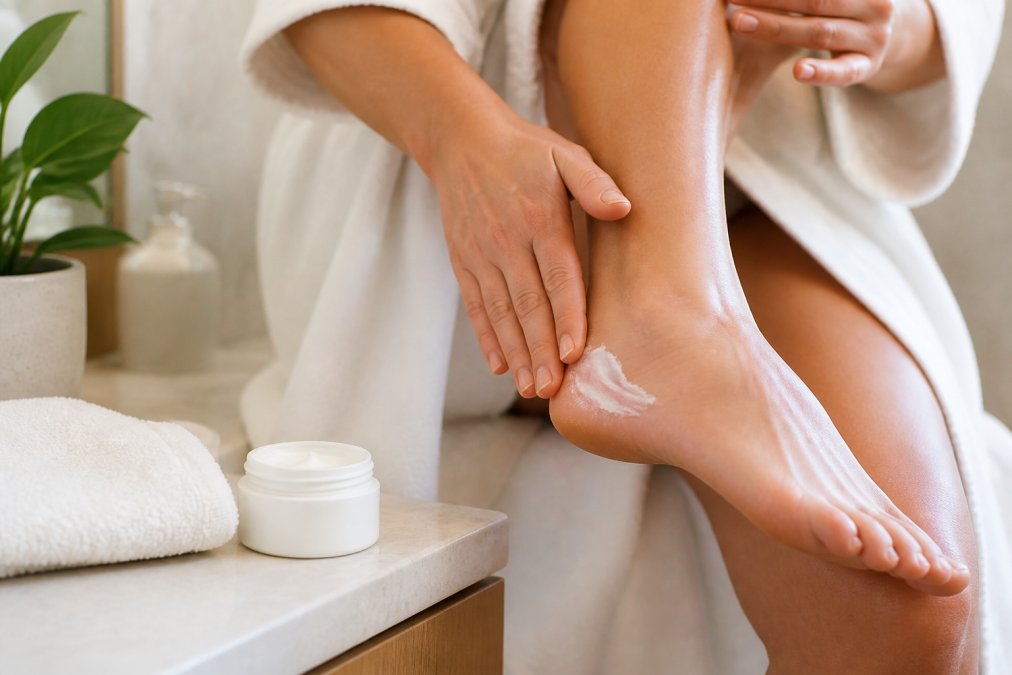
Best for extremely dry, cracked feet: O'Keeffe's Healthy Feet Foot Cream. This concentrated formula creates a protective layer that locks in moisture and helps repair cracked skin with regular use. It is the one to reach for when heels are already splitting. Sold as a three-pack of 3.2-ounce jars for $55.95, it works out cheaper per jar than most single-tube alternatives, and the thick texture is exactly what overnight treatment calls for.

Best for daily refresh and post-workout relief: Tea Tree Foot Cream with Aloe Vera and Mint. The tea tree, aloe, and mint blend softens rough skin while delivering a cool sensation that feels genuinely good after a long day on your feet. The 8-ounce size is $45.95 and suits anyone who wants a lighter cream they will actually use every day.
| Product | Size | Best For | Price |
|---|---|---|---|
| O'Keeffe's Healthy Feet Foot Cream (3-pack) | 3 x 3.2 oz | Extremely dry, cracked heels | $55.95 |
| Tea Tree Foot Cream with Aloe Vera & Mint | 8 oz | Daily use, post-workout | $45.95 |
Both are available through Sourir's foot care collection, and customers consistently mention quick shipping and products arriving exactly as described.
Diabetic Foot Care and Exfoliation vs. Hydration
Diabetic foot care changes the rules: exfoliation moves to the background, and hydration plus daily inspection move to the front. Reduced sensation means you may not feel a scrape, a burn, or a small cut, so mechanical tools like callus removers, pumice stones, and foot files carry real risk of injury you will not notice until it is infected.
The American Diabetes Association recommends daily foot checks for anyone with diabetes, looking for cuts, blisters, redness, swelling, and changes in skin color or temperature. Moisturize daily, but skip the area between the toes, since trapped moisture there encourages fungal growth. Have a clinician handle thick calluses rather than removing them yourself. If you have neuropathy, a podiatrist-recommended routine is not optional advice; it is the difference between a minor dry patch and a wound that will not heal.
Exfoliation vs. Hydration: Which One Your Feet Actually Need
These are not competing strategies, they solve different problems, and using the wrong one on the wrong foot makes things worse.
- Exfoliate when the problem is a thick, hard, painless layer of dead skin (callus) or rough texture that catches on socks. Exfoliation removes what is already dead.
- Hydrate when the problem is tightness, flaking, itching, or fine cracks that sting. Hydration restores what the skin barrier is missing.
- Do both, in order, when you have thick callus sitting on top of dry skin. Soften with a soak, exfoliate gently, then moisturize damp skin and seal it.
- Never exfoliate when the skin is cracked open, bleeding, infected, or numb. That is a hydration-and-doctor situation, not a filing situation.
The mistake most people make is reaching for a file every time their heels feel rough. If the roughness is dryness, filing removes the thin layer of skin that was still protecting the deeper layers, and the dryness comes back worse within a day.
A Safe Weekly Rhythm
For most people without diabetes or neuropathy, two to three gentle exfoliation sessions a week is plenty, with moisturizing every night in between. For anyone with diabetes, neuropathy, or poor circulation, the safer default is to skip at-home mechanical exfoliation entirely and let a clinician or podiatrist manage calluses, while you focus on daily moisturizing and inspection.
Conclusion
Rebuilding dry, cracked feet takes weeks of consistent care, not one impressive cream. The routine that works is unglamorous: soften, exfoliate gently, moisturize damp skin, and seal it overnight two to three nights a week.
Sourir carries the two formulas that make that routine easy to keep, including the concentrated O'Keeffe's Healthy Feet three-pack and the tea tree and mint cream for daily use. Both ship quickly, both are priced to keep the habit going, and both do the one thing that matters: put moisture back where your skin barrier lost it.
Frequently Asked Questions
What is the best product for extremely dry feet?
Look for a foot cream with urea or ammonium lactate as the active ingredient. Urea at 10-20% concentration softens dead skin cells and draws moisture into the skin barrier. O'Keeffe's Healthy Feet Foot Cream is a top-rated option that uses glycerin and urea to create an occlusive layer that locks in hydration. Apply after showering and cover with socks overnight for intensive repair.
What do dermatologists recommend for dry feet?
Dermatologists recommend a daily foot care routine for hydration that includes gentle exfoliation two to three times per week, followed by a thick moisturizer containing humectants like glycerin or urea and emollients like shea butter. They also suggest avoiding hot water soaks that strip natural oils, and wearing breathable socks. For cracked heels with deep fissures, a podiatrist-recommended treatment may include salicylic acid to thin thickened skin before moisturizing.
How often should you moisturize your feet for best results?
Moisturize your feet at least once daily, ideally after showering when skin is still damp. For very dry or cracked feet, apply cream twice daily and cover with cotton socks overnight. Consistency matters more than product cost. Most people see improvement in skin elasticity and softness within one to two weeks of daily maintenance. If dryness persists after three weeks, see a doctor to rule out fungal infections or underlying conditions.
Is exfoliation or hydration more important for dry feet?
Both matter, but they serve different purposes. Exfoliation removes dead skin cells that block moisturizer from absorbing. Hydration restores moisture and supports the skin barrier. Start with a foot soak or callus remover to soften rough patches, then apply a moisturizer with urea or glycolic acid. Without exfoliation, creams sit on the surface. Without hydration, exfoliated skin dries out faster. Pair them for the best results.
Dryness wins when you stop paying attention. Get started with Sourir and build a two-minute daily routine that keeps your feet comfortable, soft, and crack-free.