

How to Fix Dry Cracked Heels Fast: 4 Steps
Table of Contents
- Why Your Heels Crack and What Actually Fixes Dry Cracked Heels Fast
- Step 1: Soften Thickened Skin With a Foot Soak
- Step 2: How to Use a Foot File Safely on Calluses
- Step 3: Apply the Best Moisturizer for Cracked Heels
- Step 4: Lock In Moisture With a Nighttime Routine
- Footwear and Nutrition: Hidden Causes of Dry Skin
- When to See a Podiatrist for Cracked Heels
- Conclusion: Your Fast Fix Routine
- Frequently Asked Questions
Last Updated: September 8, 2026
Cracked heels are more than a cosmetic nuisance; deep fissures can bleed and become painful entry points for infection. The fix for how to fix dry cracked heels fast isn't a single miracle cream, but a consistent four-step process that softens, exfoliates, hydrates, and seals the skin. We’ve reviewed clinical guidance and home remedies to build a routine that targets the root cause: a compromised skin barrier and a buildup of thickened, dead tissue.
Dry cracked heels are a treatable condition, not a permanent state. With the right tools and ingredients, you can see significant improvement in just a few days. Below, we’ll show you exactly how to fix dry cracked heels fast with a routine that takes about 15 minutes each evening.
Why Your Heels Crack and What Actually Fixes Dry Cracked Heels Fast
The skin on your heels is thicker and bears your full body weight, making it prone to dryness. When it loses moisture and elasticity, it hardens into calluses. As you walk, this inflexible skin can't stretch, leading to fissures, deep cracks that can extend into the dermis and cause pain or bleeding.
The primary culprit is transepidermal water loss, where moisture evaporates faster than it can be replenished, often due to open-back shoes, dry climates, and prolonged standing. A common mistake is to only moisturize without removing the dead, hardened layer first. The fix requires physical exfoliation to remove the callus, followed by a humectant-rich moisturizer and an occlusive agent to seal it in.
Step 1: Soften Thickened Skin With a Foot Soak
Before you can safely remove a thick callus, you must soften it. Soaking your feet in lukewarm water for 10 to 15 minutes hydrates the stratum corneum, making dead skin pliable enough to file away without damaging healthy tissue (the American Academy of Dermatology).
Fill a basin with lukewarm, not hot, water, as hot water strips natural oils and worsens dryness. Epsom salt can soothe tired muscles, but the water itself does the heavy lifting for hydration. After the soak, pat your feet dry, leaving them slightly damp, the ideal window to move to Step 2.
Step 2: How to Use a Foot File Safely on Calluses
Once your skin is soft, use a foot file or pumice stone to gently buff away dead, thickened skin. The goal is to reduce the callus, not eliminate it entirely, as some thickness is a natural protective layer. Use light, short strokes in one direction, focusing only on dry, flaky areas.
Avoid sawing back and forth aggressively, which can create friction burns. After a few strokes, you should see a fine dust of dead skin. Rinse and feel the area; if it still feels rough, do another light pass. Aim for skin that feels smooth but is not shiny, red, or tender.
Foot File Safety Rules for Diabetics
If you have diabetes or peripheral neuropathy, do not use a foot file or pumice stone at all (the CDC). Reduced sensation means you may not feel a cut, which can quickly become a serious, non-healing ulcer. The safest approach is to apply a thick moisturizer daily and consult a podiatrist for professional debridement.
Step 3: Apply the Best Moisturizer for Cracked Heels
Immediately after exfoliating, while the skin is still slightly damp, apply a generous layer of a rich foot cream. The best moisturizer for cracked heels combines humectants to draw water into the skin and emollients to smooth the rough surface. Look for a product formulated for intense repair, as it will contain higher concentrations of active ingredients than a standard body lotion.

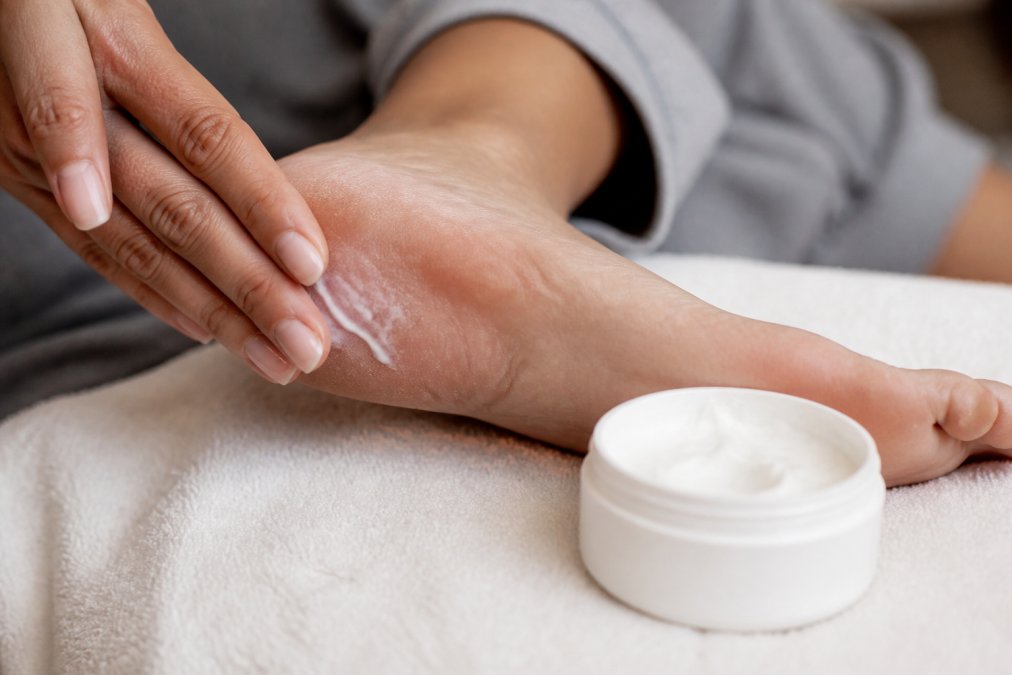
For severe cases, you need a product with a high concentration of urea, often 10% or more, which is a keratolytic agent that helps dissolve the bonds holding dead skin cells together (peer-reviewed research). A cream like the O’Keeffe’s Healthy Feet Foot Cream is designed to deliver this level of intensive hydration and is a reliable choice for repairing the skin barrier.
Understanding Urea Concentrations and Keratolytic Action
The single most important ingredient in a cracked-heel treatment is urea, which works in two ways depending on concentration. At 10% to 20%, it acts as a humectant, drawing moisture into the stratum corneum while gently breaking bonds between corneocytes. Above 20%, it becomes a more aggressive keratolytic agent, peeling away thick, hardened tissue. Higher concentrations are typically reserved for prescription-strength products.
Clinical guidance often pairs urea with ceramides, lipids that make up roughly 50% of the skin’s outer barrier. When the barrier is compromised, ceramides help rebuild the structural "mortar" between skin cells, reducing transepidermal water loss. Products listing ceramides alongside urea offer a dual mechanism: urea removes the dead layer, while ceramides restore the barrier that keeps moisture in.
Cream vs. Ointment: Formulation Trade-Offs
A critical distinction most general guides miss is the difference between a cream and an ointment. Creams are oil-in-water emulsions that feel lighter and absorb quickly, ideal for daytime use. Ointments are water-in-oil emulsions with a higher oil content, creating a thicker, more occlusive layer. For severe fissures that have not responded to a cream, switching to an ointment can provide the extra occlusion needed to drive moisture deeper.
The trade-off is cosmetic: ointments feel greasy and take longer to absorb, so they are best reserved for nighttime occlusion. A practical approach is to use a urea-based cream during the day and a heavier ointment or balm at night under cotton socks, maximizing both keratolytic action and barrier repair.
Key Ingredients That Repair the Skin Barrier
Effective heel repair relies on three categories of ingredients working in synergy. Humectants, such as urea and glycerin, pull moisture into the epidermis. Emollients, like shea butter and aloe vera, fill gaps between skin cells to smooth the surface. Occlusives, such as lanolin or mineral oil, create a physical barrier to prevent transepidermal water loss.
A minty product like the Viking Revolution Tea Tree Foot Cream can provide a refreshing sensation while delivering aloe vera and tea tree oil to soothe and soften. The presence of ceramides is another marker of quality, as these lipids help restore the skin barrier's structural integrity.
How to Apply for Maximum Absorption
Application technique matters as much as product choice. Massage the cream into the heel using firm, circular motions for at least 30 seconds per foot, which stimulates blood flow and helps active ingredients penetrate more deeply. Pay special attention to the edges of fissures, where skin is most fragile. For extremely deep cracks, applying a thin layer of 10% urea cream directly into the fissure before covering the heel with a thicker layer of ointment can be beneficial.
Step 4: Lock In Moisture With a Nighttime Routine
This step separates a temporary fix from a lasting cure. After applying your moisturizer, lock it in with an occlusive layer to prevent evaporation and rubbing off on your sheets. This is called occlusion therapy, the most effective way to force hydration deep into the stratum corneum.
The simplest method is to apply a thick layer of foot cream and cover your feet with cotton socks. The socks keep moisture and active ingredients in contact with the skin for 6 to 8 hours, dramatically enhancing absorption and accelerating repair.

Footwear and Nutrition: Hidden Causes of Dry Skin
Your daily habits outside your foot care routine can undermine your progress. Open-backed shoes like sandals and flip-flops expose your heels to the air, accelerating moisture loss, and cause the fat pad under your heel to spread, increasing pressure on the skin. Wearing shoes with a closed heel and cushioned soles provides support and protection.
The Footwear Pressure Map: Why Shoe Choice Matters
Most articles stop at "wear closed shoes," but the mechanism is more specific. In flip-flops or backless slides, the lack of a heel counter (the rigid back part of a shoe) forces the fat pad beneath your heel to spread laterally, increasing tensile stress on the skin. When that skin is already dry and inflexible, it cracks under the pressure. Supportive sneakers or boots with a firm heel counter keep the fat pad contained, distributing pressure more evenly.
A practical test: if your cracks worsen after a summer of sandals, footwear is likely a primary driver. Switching to a shoe with a closed heel and cushioned insole, even for a few weeks, can reduce mechanical stress on fissures. For dress shoes, look for styles with a leather or synthetic heel counter rather than soft, collapsible materials.
Nutritional Deficiencies and Internal Hydration
Nutritional deficiencies can also manifest as dry, cracking skin. A lack of essential fatty acids, zinc, or vitamin B3 can compromise skin health and elasticity. While a foot cream addresses the surface, staying hydrated and maintaining a balanced diet supports skin repair from the inside out.
The skin barrier is built from lipids and proteins that require specific nutrients to synthesize. Omega-3 fatty acids, found in salmon, walnuts, and flaxseed, improve epidermal flexibility and reduce water loss. Zinc supports skin cell turnover and wound healing; a deficiency can slow fissure repair. Vitamin B3 (niacinamide) supports ceramide production, the same lipids topical creams aim to replenish.
Patients with chronically dry, cracked skin are often chronically under-hydrated, as the skin is the last organ to receive water when intake is low. The standard recommendation is to drink enough water so urine is pale yellow, roughly 8 to 10 cups per day for most adults, though needs vary with activity and climate.
When Diet Alone Is Not Enough
If you have addressed footwear, hydration, and diet and still see no improvement after four to six weeks of consistent topical treatment, discuss blood work with your physician. Persistent, severe fissures can signal hypothyroidism, which reduces skin cell turnover, or type 2 diabetes, which impairs circulation. A blood panel checking thyroid-stimulating hormone (TSH) and hemoglobin A1c can rule out these causes.
When to See a Podiatrist for Cracked Heels
While home care is effective for most cases, there are times when you need professional advice. If cracks bleed, show signs of infection like redness, swelling, or discharge, or cause significant pain when walking, stop home treatment and see a podiatrist. These symptoms can indicate a more serious condition requiring prescription treatments or professional debridement.
Individuals with diabetes, poor circulation, or a weakened immune system should also seek professional care rather than attempting aggressive home exfoliation. Minor foot issues can escalate quickly in compromised patients. A podiatrist can safely remove thickened skin and identify whether your cracked heels signal a condition like athlete's foot or a thyroid issue.
Conclusion: Your Fast Fix Routine
Fixing dry cracked heels fast is a matter of consistency, not intensity. A single soak and moisturize session provides temporary relief, but real repair requires repeating the cycle: soak to soften, file to remove dead skin, moisturize to hydrate, and seal with socks overnight. Within a few days, you should notice a significant reduction in crack depth and improved skin smoothness.
The challenge is sticking with the nightly routine long enough to see the barrier repair. Sourir offers affordable, high-performing foot care solutions designed to fit into a busy schedule, bringing comfort and balance directly into your home with quick shipping. Get started with Sourir and give your feet the moisture they need to heal and stay healthy.
Frequently Asked Questions
How can I fix dry cracked heels fast in 3 days?
To see significant improvement in 3 days, focus on intense hydration and occlusion. Soak your feet in lukewarm water for 10 minutes, gently file away loose dead skin with a foot file, then apply a thick layer of a cream with urea or ceramides. Immediately put on cotton socks to lock in the moisture and leave them on overnight. Repeat this routine each night. While deep fissures take longer to fully close, you should notice softer skin and reduced pain within 72 hours.
What is the root cause of dry, cracked heels?
Cracked heels happen when the skin's moisture barrier fails, leading to transepidermal water loss. This causes the stratum corneum to lose elasticity and thicken, forming calluses. When you put weight on your feet, these hardened areas crack under pressure, creating fissures. Common contributors include prolonged standing, open-back shoes that let the heel pad expand, obesity, and dry air. Nutritional deficiencies and medical conditions like diabetes can also increase your risk.
What do podiatrists recommend for cracked heels?
Podiatrists typically recommend a combination of daily exfoliation and intensive moisturizing. They often suggest using a foot file on damp, not dry, skin to safely remove thickened skin. For moisturizers, they look for ingredients like urea, which breaks down dead skin, and ceramides, which repair the skin barrier. They also stress the importance of occlusion, like wearing cotton socks after applying a rich heel balm, to maximize absorption and prevent moisture loss overnight.
When should you see a doctor for dry cracked heels?
See a podiatrist if the cracks are deep, bleeding, or show signs of infection like redness, swelling, or warmth. You should also seek medical advice if you have diabetes or poor circulation, as even minor fissures can lead to serious complications. If your heels do not improve after two weeks of consistent moisturizing and exfoliation, a doctor can rule out underlying conditions like athlete's foot or thyroid issues and may prescribe a stronger topical treatment.