

Is Urea Cream Worth It for Deep Heel Cracks?
Table of Contents
- Does Urea Cream Actually Help Deep Heel Cracks?
- How Urea Softens Thick, Hardened Skin
- Understanding Urea Concentration: 40% Urea Cream for Feet
- How Often to Apply Urea Cream to Feet for Best Results
- Best Foot Cream for Cracked Heels: What Actually Works
- When to See a Doctor for Cracked Heels
- Real Results: What You Can Expect and When
- Conclusion: Is Urea Cream Worth Your Investment?
- Frequently Asked Questions
Last Updated: October 7, 2026
Does Urea Cream Actually Help Deep Heel Cracks?
Is urea cream worth it for deep heel cracks? Yes, if you have realistic expectations and consistent application. It softens thick, hardened skin and restores moisture, but deep fissures that bleed or cause severe pain need medical attention first.
It helps mild to moderate cracks heal faster when used daily, with many people seeing improvement within one to two weeks, but stop applying it and the dryness returns.
How Urea Softens Thick, Hardened Skin
Urea is a keratolytic: it breaks down the bonds between dead skin cells.
The process is gradual.
Dry skin is brittle; hydrated skin is flexible. Urea cream does both, it removes the dead, inflexible layer and adds moisture back.
The softening effect takes time: most people notice roughness improving after three to five days of consistent use, and visible cracks begin closing within one to two weeks.
Understanding Urea Concentration: 40% Urea Cream for Feet
Not all urea creams are the same. The concentration on the label changes what the product can do, how fast it works, and how likely it is to sting.
Urea concentration ranges from about 10% to 50% in U.S. foot creams.
- 10-20% urea: Hydration-first. Best for mild dryness, sandpaper texture, and maintenance after a crack has closed. It will soften a thick callus slowly, if at all.
- 20-30% urea: The step-down zone. Useful for healing skin that is no longer raw, for people who sting easily, and for transitioning off a stronger product without rebound dryness.
- 30-40% urea: The workhorse for thick, hardened heel skin and shallow-to-moderate fissures. This is where most people land for active treatment.
- 40-50% urea: Maximum keratolytic strength. Reserved for very thick, tough callus and deep cracks with intact skin. Highest sting risk on any break in the surface.
40% urea cream for feet is the most common recommendation for deep heel cracks: strong enough to thin hardened skin without routinely irritating intact skin.
How to choose and step up or down
Match the strength to the skin you actually have.
- Intact, thick, dry heel with a visible crack but no bleeding: start at 30-40%.
- Open, raw, or bleeding fissure: do not start at 40%. Let the bleeding stop, then begin at 20-30% and step up only when the skin is no longer raw.
- Sensitive skin or a history of stinging: start at 10-20% and increase slowly.
- Maintenance after healing: drop to 10-20% and apply less often.
A common pattern: treat at 40% until the crack closes, then maintain at 20%. Staying at 40% indefinitely is unnecessary and raises irritation odds.
Reading the label
Many foot creams do not state the urea percentage clearly. Two practical checks:
- Look for the percentage. If it is not stated, assume it is low (often under 10%) and treat it as a moisturizer, not a keratolytic.
- Check the ingredient order. In the U.S., ingredients are listed by weight down to 1%. Urea appearing in the first few ingredients signals a meaningful amount; urea near the bottom signals a token inclusion.
Watch companion ingredients too: lactic acid, salicylic acid, and alpha-hydroxy acids add exfoliation and can compound irritation with high-concentration urea, while petrolatum, shea butter, and glycerin improve comfort without sting.
How Often to Apply Urea Cream to Feet for Best Results
Apply urea cream once or twice daily, with twice-daily application (morning and night) giving the fastest improvement.
Here's the realistic timeline:
- Week 1: Skin starts softening. Roughness decreases slightly. No dramatic change yet.
- Week 2-3: Visible improvement. Cracks begin closing. Pain decreases if there was any.
- Week 4+: Most shallow to moderate cracks are noticeably better or healed.
Consistency is key: skin reverts to dryness faster than it heals, so daily application keeps moisture high enough for cracks to close.
Best application routine:
- Apply right after showering (skin is damp and absorbs better)
- Rub in gently until fully absorbed
- For deep cracks, cover with cotton socks overnight to lock in moisture
- Repeat in the evening or before bed
Many people apply at night: you're not walking on your feet, so the cream stays in place longer and penetrates deeper.
If twice daily feels like too much, once daily still works, it just takes longer.
Best Foot Cream for Cracked Heels: What Actually Works
Not every foot cream contains urea. Many contain only emollients like petrolatum, which moisturize but don't soften thick skin the way urea does.
For deep heel cracks, you need a cream that combines:

- Urea (the active ingredient) to soften hardened skin
- Emollients (like petrolatum or shea butter) to lock in moisture
- Lactic acid (optional but helpful) to enhance skin softening
Lactic acid works alongside urea to break down dead skin, and creams containing both often heal faster than urea alone.
What to look for on the label:
for Healthy Feet Foot Cream; Guaranteed Relief for Extremely Dry; Cracked Feet →
- Urea listed in the first three ingredients
- A concentration of 30-40% for deep cracks
- Petrolatum or similar occlusive moisturizer to seal in hydration
- Lactic acid as a bonus ingredient for faster results
Regular lotion doesn't work for deep cracks: it moisturizes the surface but doesn't soften the thick, hardened skin underneath.
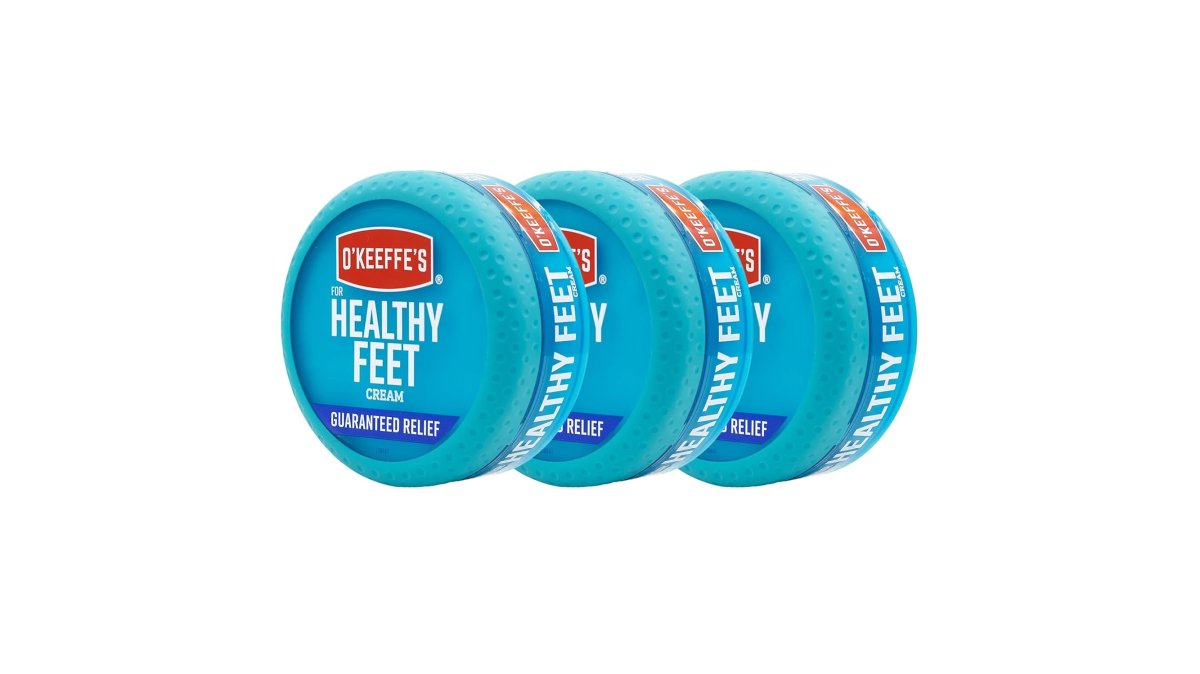
At Sourir, we carry foot creams designed for dry, cracked heels. Our O'Keeffe's Healthy Feet Foot Cream (3-pack, $55.95) softens rough skin, boosting moisture instantly and maintaining hydration with consistent use.
When to See a Doctor for Cracked Heels
Most cracked heels respond to urea cream and consistent care, but not every fissure is simple dryness, treating the wrong cause can waste weeks or make things worse. Here's what else causes deep heel cracks, and when self-treatment should stop.
Cracks that are not just dryness
Persistent or one-sided cracks often have a driver other than dry skin:
- Mechanical pressure and footwear. Open-back shoes, thin soles, prolonged standing, and excess weight increase the shear force on the heel pad. The skin splits where it stretches most. Urea cream softens the skin, but the crack keeps reopening if the pressure is not addressed.
- Fungal infection (tinea pedis). Athlete's foot can cause dry, scaly, fissured heel skin, sometimes without the classic itch. Urea cream will not treat the fungus and may mask it.
- Eczema and psoriasis. These inflammatory conditions can produce thick, fissured heel skin that behaves differently from simple callus and often needs prescription treatment.
- Diabetes-related skin changes. Chronically elevated blood sugar affects skin hydration and healing, and can make fissures slower to close and more prone to infection.
If cracks are one-sided, itchy, scaly between the toes, or keep returning despite good urea use, the cause may not be dryness alone.
Stop self-treating and get evaluated if:
- Cracks are deep, bleeding, or will not stop bleeding
- You have severe pain that interferes with walking
- The area shows signs of infection: redness, warmth, swelling, pus, or a foul odor
- Cracks worsen or fail to improve after two to four weeks of consistent urea cream use
Why diabetes and circulation change the calculus
For people with diabetes, peripheral neuropathy, or poor circulation, a deep heel crack is not just cosmetic: reduced sensation can hide how deep a fissure has become, and reduced blood flow slows healing and raises infection risk. Have a clinician assess deep or non-healing cracks before self-treating, and check your feet daily.
What a clinician may do
Depending on the cause, a clinician may:
- Test for fungal infection and prescribe an antifungal
- Prescribe a stronger keratolytic or a topical steroid for an inflammatory condition
- Debride thick callus in the office
- Recommend offloading, orthotics, or footwear changes
- Evaluate circulation and sensation
Urea cream remains useful in many of these cases, but it is a supporting tool, not a substitute for treating the underlying cause.
Real Results: What You Can Expect and When
Healing timelines depend on crack depth and how consistently you apply the cream.
Mild cracks (surface level, no bleeding):
- Week 1: Visible softening, less roughness
- Week 2: Cracks noticeably smaller
- Week 3-4: Most healed or closed
Moderate cracks (visible depth, occasional dryness):
- Week 1: Softening begins, slight improvement
- Week 2-3: Cracks closing, pain decreasing
- Week 4-6: Mostly healed, skin smoother
Deep cracks (painful, bleeding, or very thick skin):
- Week 1-2: Softening starts, bleeding stops
- Week 3-4: Visible closure, pain relief
- Week 6-8: Significant improvement, may need ongoing maintenance
Consistency matters most: twice-daily users see faster results, and those who skip days take much longer.
Results are usually obvious by week three: smoother heels, smaller cracks, and walking without pain.
After six to eight weeks of consistent use, many people switch to once-daily application for maintenance, preventing cracks from returning with less effort.
Conclusion: Is Urea Cream Worth Your Investment?
Is urea cream worth it for deep heel cracks? Yes, if you commit to consistent daily use.
The catch: urea cream requires discipline. Skip a few days and you're back to square one, but a simple daily routine delivers real improvement.
Deep heel cracks don't have to be permanent. Our curated foot creams, including O'Keeffe's Healthy Feet and Tea Tree Foot Cream, boost moisture, soften rough skin, and support your daily wellness routine.

Frequently Asked Questions
Does urea cream help heal deep heel cracks?
Urea cream works by softening the thick, hardened skin that forms deep heel cracks and fissures. It breaks down dead skin cells and increases moisture retention, which helps cracks close over time. Results depend on consistency and severity, mild to moderate cracks often show improvement within 1-2 weeks of daily use, while deep fissures may take 3-4 weeks. Urea is most effective when paired with regular application and an occlusive moisturizer to lock in hydration.
How often should you apply urea cream to cracked heels?
Apply urea cream to your feet once or twice daily, typically after showering when skin is clean and slightly damp. Most people see better results with consistent twice-daily application, morning and evening. For deep heel cracks, many find that applying the cream at night and covering feet with cotton socks helps the product work longer and prevents moisture loss. Consistency matters more than frequency; missing applications slows healing.
Is 40% urea cream safe to use on open, bleeding cracks?
40% urea concentration is strong and works faster on thick, hardened skin, but use caution on open or actively bleeding fissures. If your cracks are bleeding or extremely painful, start with a lower concentration or consult a healthcare provider first. Once bleeding stops and cracks begin to close, you can safely use 40% urea cream. Always avoid applying urea to broken skin that shows signs of infection, such as warmth, pus, or increasing redness.
When should you see a doctor for deep heel cracks?
Seek medical attention if cracks are bleeding heavily, show signs of infection (warmth, swelling, pus, or red streaks), cause severe pain that prevents walking, or don't improve after 4-6 weeks of consistent urea cream use. A healthcare provider can rule out underlying conditions like diabetes or fungal infection, which may require different treatment. If cracks are accompanied by itching or burning that suggests a fungal issue, professional diagnosis is important.