

How to Treat Aging Eye Area: A Complete 2026 Guide
Table of Contents
- Why the Eye Area Ages Faster Than the Rest of Your Face
- How to Reduce Under Eye Puffiness Every Morning
- Best Ingredients for Aging Eye Skin (and What to Avoid)
- How to Apply Eye Cream Correctly for Better Absorption
- Professional Treatments for the Aging Eye Area: What Actually Works
- Budget-Tiered Treatment Plans for Every Commitment Level
- Lifestyle Habits That Support Long-Term Eye Health
- Conclusion: Building Your Personalized Eye Care Plan
- Frequently Asked Questions
Last Updated: September 28, 2026
Why the Eye Area Ages Faster Than the Rest of Your Face
The skin around your eyes is the thinnest on your body, so it shows age before anywhere else. This guide from Sourir explains how to treat aging eye area concerns at home and what to expect from professional care.
Periorbital aging is the medical term for the changes that happen around the eyes over time. It starts earlier than most people expect. The skin under your eyes is roughly ten times thinner than the skin on your heels, and it has far fewer oil glands to keep it soft. Collagen production slows with age, and that thin skin loses its support structure first.
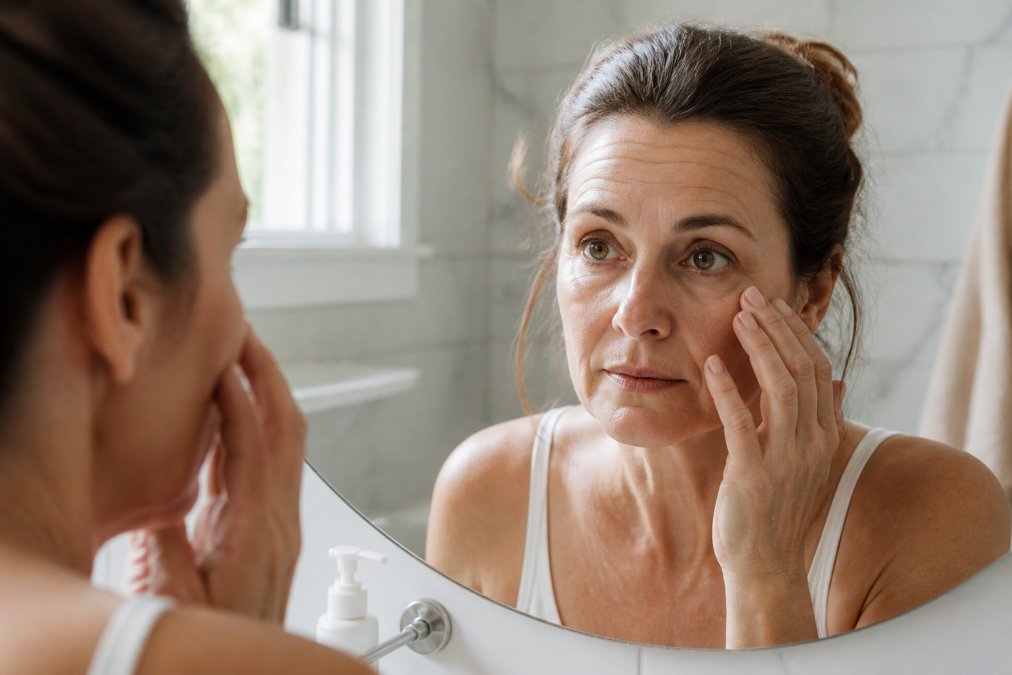
The Anatomy of Periorbital Aging
Four changes drive most under-eye aging:
- Volume loss as subcutaneous fat pads shift and thin
- Skin laxity as collagen and elastin break down
- Bone changes that deepen the tear trough
- Photodamage from years of sun exposure
Signs to Watch For at Every Decade
Your 30s usually bring fine lines and early crow's feet. Your 40s add crepey texture and darker circles. By your 50s, volume loss and skin laxity become the main concerns. Catching each stage early makes treatment easier.
How to Reduce Under Eye Puffiness Every Morning
The fastest way to reduce under eye puffiness is a cold compress plus gentle lymphatic drainage. Most of that morning puffiness is fluid, not fat, so it responds well to simple habits.
Try this five-minute routine:
- Splash cool water over your face
- Press a chilled spoon or cold mask under each eye for 60 seconds
- Pat from the inner corner outward with your ring finger
- Repeat three times per side
- Finish with a light moisturizer
Cold Therapy and Lymphatic Drainage Techniques
Cold therapy narrows blood vessels and calms swelling. Lymphatic drainage moves trapped fluid toward the lymph nodes. Keep pressure gentle. The skin here tears easily if you drag it.
Best Ingredients for Aging Eye Skin (and What to Avoid)
The best ingredients for aging eye skin are retinoids, hyaluronic acid, topical peptides, antioxidants, and niacinamide. Each targets a different part of the problem.
- Retinoids support cellular turnover and soften fine lines
- Hyaluronic acid pulls water into the skin and plumps hydration levels
- Topical peptides signal collagen production
- Antioxidants like vitamin C fight photodamage
- Niacinamide brightens pigmentation and calms redness
Ingredient Interactions and Contraindications
Retinoids and strong acids do not mix well in the same routine. Using both at once often causes irritation, redness, and peeling. If you use a prescription retinoid, apply it at night and keep vitamin C for the morning. Skip retinoids during pregnancy. Patch test any new active on your inner arm first.
How to Apply Eye Cream Correctly for Better Absorption
Applying eye cream correctly means using a pea-sized amount, patting with your ring finger, and working from the inner corner outward. More product does not mean better results.

The ring finger applies the least pressure, which protects thin skin. Warm the cream between your fingertips first. Then tap, never rub.
A product like Sourir's Collagen Eye Cream fits this step well. It combines collagen, hyaluronic acid, and niacinamide in a lightweight formula that absorbs without tugging.
A 3-Step Morning and Evening Routine
| Time | Step | What to Use |
|---|---|---|
| Morning | Cleanse and cool | Cool water, chilled mask |
| Morning | Hydrate and protect | Eye cream, then sunscreen |
| Evening | Treat | Retinoid or peptide cream |
| Evening | Seal | Richer moisturizer |
Professional Treatments for the Aging Eye Area: What Actually Works
Professional treatments range from non-invasive to surgical, and results scale with cost, downtime, and risk. A dermatological assessment should come before any of them, because the right option depends on whether your main issue is volume loss, skin laxity, pigmentation, or fluid retention, four different problems that respond to four different interventions.
Collagen Eye Cream Skincare anti Dark →
Non-Surgical Options: Lasers, Fillers, and Bio-Stimulators
Dermal fillers. Hyaluronic acid fillers are the standard for tear-trough hollowing. A trained injector places small volumes deep along the orbital rim to restore lost support. Results are visible immediately and typically last six to eighteen months depending on the product and your metabolism. The main risks are bruising, swelling, and, in less experienced hands, the Tyndall effect, a bluish tint under thin skin. Ask your injector how many tear-trough cases they perform per month.
Fractional laser and skin resurfacing. Fractional CO2 and erbium lasers create controlled micro-injuries that trigger collagen remodeling, which improves crepey texture, fine lines, and some pigmentation.
Surgical Options: Blepharoplasty and When to Consider It
Blepharoplasty removes excess skin and, in some cases, repositioned fat from the upper or lower lids. It is the right conversation when the problem is true skin laxity or herniated fat pads, the kind of puffiness that does not respond to cold compresses or caffeine creams. Upper-lid surgery is often done under local anesthesia; lower-lid surgery is more involved. Most patients return to normal activities within one to two weeks, with residual swelling fading over several weeks.
What to Expect, and What Not To
A common pattern is that patients arrive expecting one treatment to fix everything. In practice, most periorbital rejuvenation plans combine two or three modalities, for example, a filler for hollowing plus a laser series for texture. Setting expectations before the first appointment prevents disappointment after it. Ask your practitioner for a realistic timeline: most non-surgical results peak at three to six months, not the week after treatment.
Budget-Tiered Treatment Plans for Every Commitment Level
A budget-tiered plan lets you match spending to your goals. Here is how the three levels compare.
| Tier | Monthly Cost | What It Includes | Best For |
|---|---|---|---|
| Starter | Under $50 | Eye cream, cold masks, SPF | Early fine lines |
| Mid-Range | $50-$150 | Add serum, masks, facials | Visible circles |
| Advanced | $150+ | In-office treatments | Deep volume loss |
Lifestyle Habits That Support Long-Term Eye Health
Daily habits shape how your eye area ages more than any single product. But not all habits carry equal weight, and the ones that matter most are also the ones most people skip. Here is how to prioritize them.
The Psychological Side Nobody Talks About
Most guides jump straight to procedures. What they skip is that aging eyes affect how people feel about their face, and that mismatch between expectation and reality is where dissatisfaction usually starts. A few honest anchors:
- No topical product reverses volume loss. Creams can hydrate, soften fine lines, and brighten, but they cannot restore fat pads that have shifted. If hollowing is your main concern, no eye cream will fix it.
- Timelines are longer than marketing suggests. Most over-the-counter actives need eight to twelve weeks of consistent use before you can judge them. Retinoids can take longer, with a purge period in between.
- Comparison photos mislead. Lighting, angle, and hydration change how the eye area looks hour to hour. Photograph yourself in the same light at the same time of day if you want a fair comparison.
- Progress is gradual, not linear. Skin quality fluctuates with sleep, stress, and hormones. A bad week is not a failed routine.
Conclusion: Building Your Personalized Eye Care Plan
The real challenge is staying consistent long enough to see change. Most people quit a routine before it has time to work, then blame the products.
Frequently Asked Questions
What causes the eye area to age faster than the rest of the face?
The skin around your eyes is only about 0.5 millimeters thick, roughly four times thinner than the rest of your face. It also has fewer oil glands and less subcutaneous fat, which means it loses moisture and volume faster. Add in constant blinking (roughly 10,000 times daily) and sun exposure, and you get accelerated collagen breakdown, fine lines, and crepey texture long before other areas show similar signs.
Do eye masks really help with aging eye concerns like dark circles and puffiness?
Yes, when used consistently. Eye masks deliver concentrated ingredients like hyaluronic acid and collagen directly to the under-eye area, boosting hydration levels and temporarily reducing puffiness through cooling effects. For best results, use them 2-3 times weekly as part of a broader routine that includes sun protection, retinoids, and adequate sleep. They work best as a complement to daily eye cream, not a replacement.
How long do I need to use eye products before I see moisture and comfort improvements?
Hydration improvements from ingredients like hyaluronic acid and niacinamide can show up within a few days. Fine lines and crepey texture take longer, typically 6-12 weeks of consistent use, because they involve cellular turnover and collagen production. For puffiness, you may notice a difference after a single use of a cooling eye mask. Consistency matters more than any single product.
At what age should you start using an eye cream?
Most dermatologists suggest starting in your mid-20s to early 30s, when collagen production begins its natural decline. That said, if you are already seeing fine lines, dark circles, or dryness in your 40s or 50s, it is never too late. A simple routine with a hydrating eye cream, sunscreen, and a weekly eye mask can still improve skin elasticity and hydration levels noticeably.