

How to Heal Dry Feet Overnight: Fast Cracked Heel Fix
Table of Contents
- Why Your Feet Get So Dry (And Why Overnight Works)
- What You'll Need for an Overnight Foot Treatment
- Step-by-Step: How to Heal Dry Feet Overnight
- How to Fix Dry Cracked Heels Fast with the Right Moisturizer
- The Best Moisturizer for Cracked Heels: What to Look For
- Building an Exfoliating Feet Routine That Prevents Cracks
- Common Mistakes That Slow Healing
- When to See a Podiatrist
- Frequently Asked Questions
Last Updated: September 16, 2026
Why Your Feet Get So Dry (And Why Overnight Works)
If you want to know how to heal dry feet overnight, the answer starts with timing: your skin repairs itself while you sleep, so an eight-hour treatment window does more than a daytime application ever will. At Sourir, we hear from customers who have spent years fighting rough heels with lotions that evaporate before lunch.
The Moisture Barrier Problem
The moisture barrier is the thin outer layer of skin that holds water in and keeps irritants out. When it breaks down, water escapes faster than your body can replace it, a process called trans-epidermal water loss. Dry air, friction from shoes, and hot showers all speed up that loss, which is why heels crack first.
What Makes Overnight Treatment Different
Daytime moisturizers sit on skin that is constantly moving, sweating, and rubbing against socks. Overnight, feet stay still and covered. A thick heel balm or occlusive layer traps moisture against the skin for hours instead of minutes, giving ingredients like urea and glycerin time to actually absorb.
What You'll Need for an Overnight Foot Treatment
Gather everything before you start so the routine takes minutes, not an hour. You do not need a cabinet full of products, just the right few:
- A basin or tub for soaking
- Epsom salt or a plain warm-water soak
- A pumice stone or foot file
- A urea-based or glycerin-rich foot cream
- Cotton socks or a pair of treatment socks
- A towel and a soft brush
Step-by-Step: How to Heal Dry Feet Overnight
Total Time: 20 minutes of active work, then 6-8 hours overnight Difficulty: Beginner

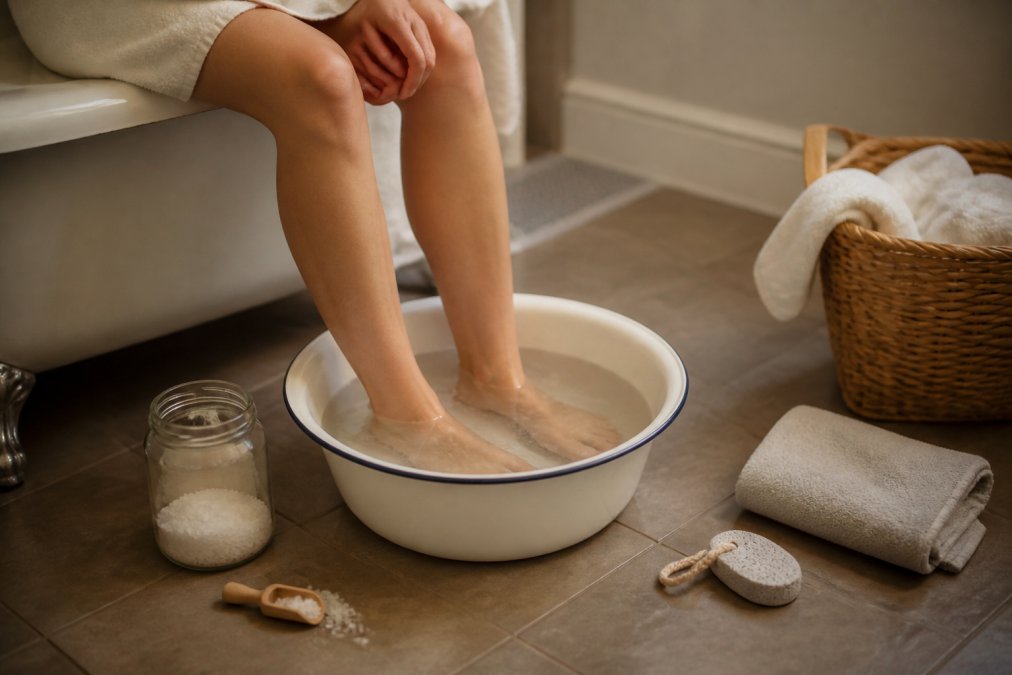
Step 1: Soak and Soften [Time: 10 minutes]
Fill a basin with warm, not hot, water and soak for ten minutes. Warm water softens the callus and loosens dead skin cells so the next step works without force. Hot water strips oils and leaves skin drier than it started.
Step 2: Exfoliate Gently [Time: 5 minutes]
Pat feet dry, then work a pumice stone or foot file over the heels and soles in slow circles. Stop while the skin still feels slightly rough rather than pushing until it feels smooth. One session will not erase years of buildup, and trying to force it causes fissures.
Step 3: Apply Treatment and Cover [Time: 5 minutes]
Massage a generous layer of foot cream into the heels and soles, then pull on cotton socks. The socks hold the product against your skin and keep it off your sheets. Sleep. Rinse in the morning and repeat two or three nights in a row for the first week.
How to Fix Dry Cracked Heels Fast with the Right Moisturizer
Learning how to fix dry cracked heels fast comes down to one product decision: choose a moisturizer built for feet, not one built for hands or body. According to the American Academy of Dermatology guidance on dry skin, thicker creams and ointments outperform thin lotions because they hold water in the skin rather than letting it evaporate.
The Best Moisturizer for Cracked Heels: What to Look For
The best moisturizer for cracked heels is not the thickest one on the shelf. It is the one that matches your skin type, your crack severity, and your tolerance for active ingredients. Here is how to choose, not just what to buy.
Match the Formula to Your Skin Type
| Skin Type | What to Look For | What to Avoid |
|---|---|---|
| Calloused, thick heels | Urea 10-25%, lactic acid, salicylic acid | Thin lotions; fragrance-first formulas |
| Sensitive or reactive skin | Glycerin, ceramides, colloidal oatmeal, petrolatum | High-concentration acids, essential oils, fragrance |
| Diabetic or neuropathic feet | Petrolatum-based ointments, ceramide creams, cleared by your podiatrist first | Any keratolytic (urea, salicylic, lactic) without medical approval |
| Cracked and bleeding | Occlusive ointment only until skin closes | Acids, exfoliants, tea tree oil on open skin |
Read the Ingredient List in This Order
First, look for the humectant. Glycerin, hyaluronic acid, or urea draw water into the skin. Without one of these, you are just coating the surface.

Concentration Matters More Than Brand
A 10% urea cream and a 40% urea cream are not the same product. Lower concentrations (10-15%) are for daily maintenance and sensitive skin. Mid-range (20-25%) is for thick callus and stubborn heels. Higher concentrations are typically reserved for professional or prescription use. If the label does not state the percentage, assume it is on the low end.
Ingredient Safety and Contraindications
This is the part most guides skip. A few ingredients that are fine for most people are not fine for everyone:
for Healthy Feet Foot Cream; Guaranteed →
- Urea and salicylic acid can sting or burn on cracked, open skin. Wait until fissures close before using them.
- Tea tree oil is a known sensitizer. Patch-test on the inner arm for 24 hours before applying to feet, especially if you have eczema or contact dermatitis.
- Lanolin triggers reactions in people with wool allergies.
- Essential oils and fragrance are the most common cause of contact dermatitis on the feet. If a cream makes your feet itch or redden, stop using it.
- Diabetic and neuropathic feet deserve a separate rule: no at-home acids, no filing, no soaking without a clinician's approval. Reduced sensation means you may not feel a burn or a cut until it is infected.
A Simple Selection Shortcut
If you want one rule: pick a cream with glycerin or urea near the top of the ingredient list, petrolatum or dimethicone in the middle, no fragrance, and a stated urea percentage. That combination covers the majority of dry, cracked heels without over-treating sensitive skin.
Building an Exfoliating Feet Routine That Prevents Cracks
Most articles stop at the overnight fix. That is the easy part. The hard part, and the part that actually keeps heels from cracking again, is a weekly maintenance schedule you can sustain for months, not three days. Here is the framework most podiatrists and dermatology practices recommend, adapted so it fits a normal week.
The Weekly Maintenance Schedule
| Day | Action | Time |
|---|---|---|
| Sunday | Full treatment: soak, gentle file, thick cream, cotton socks overnight | 20 min + overnight |
| Monday-Tuesday | Light cream after shower, no filing | 1 min |
| Wednesday | Mid-week moisture boost: cream plus socks for 1-2 hours in the evening | 5 min |
| Thursday-Friday | Light cream after shower, no filing | 1 min |
| Saturday | Rest night, let the skin barrier recover | 0 min |
That is roughly 30 minutes of active work per week. The overnight treatment is the reset; the rest of the week is what protects the result.
Why Over-Exfoliating Backfires
A common pattern is to file aggressively every night during the first week because the results feel slow. That strips the stratum corneum faster than the skin can rebuild it, and the barrier responds by producing more callus, the opposite of what you want. File once a week, twice at most if your heels are very thick. Stop while the skin still feels slightly rough.
The Long Game: What Progress Actually Looks Like
Skin elasticity takes weeks to rebuild, so judge progress monthly, not daily. A realistic timeline:
- Night 1: Skin feels softer and looks less ashy by morning.
- Week 1-2: Shallow cracks begin to close; heels feel smoother under a sock.
- Week 3-4: Callus thickness visibly decreases; new cracks stop forming.
- Week 6-8: Heels hold moisture through the day without reapplication.
Seasonal Adjustments
Winter and summer demand different routines. In low-humidity winter months, add a humidifier to the bedroom and switch to a thicker occlusive at night. In summer, when feet are in sandals and exposed to sun, use a lighter cream during the day and save the heavy treatment for overnight.
When to Pause the Routine
Skip filing entirely if the skin is raw, stinging, or bleeding. Skip keratolytic creams (urea, salicylic acid, lactic acid) if the skin is broken, they will sting and slow healing. Resume the gentle cream-and-socks step only once the skin has closed. If you have diabetes, neuropathy, or poor circulation, do not self-manage a maintenance schedule at all; have a podiatrist set the cadence for you.
Common Mistakes That Slow Healing
The biggest mistake is picking at cracked skin or peeling it. Fissures that reopen take longer to close than they did the first time, and broken skin invites infection.
When to See a Podiatrist
See a podiatrist if a crack bleeds, hurts when you walk, or shows signs of infection such as redness, swelling, or discharge. Deep fissures that reach the dermis will not close with cream alone, and a podiatric professional can debride the callus safely and recommend a therapeutic treatment plan.
Frequently Asked Questions
What is the fastest way to heal dry feet?
The fastest approach combines soaking, gentle exfoliation, and a thick moisturizer applied before bed. Soak feet in warm water for 10-15 minutes, pat dry, then use a pumice stone or foot file to remove dead skin cells. Apply a urea or glycerin-based cream, cover with socks, and sleep. This overnight treatment helps lock in hydration while you rest, often showing visible improvement by morning.
What is the best thing to put on dry feet at night?
Look for a moisturizer with urea, glycerin, or aloe vera. Urea acts as a keratolytic, softening thick callus and helping skin absorb moisture. Glycerin draws water into the skin, while occlusive ingredients create a barrier that reduces trans-epidermal water loss. Apply a generous layer, then wear cotton socks overnight to keep the product in place and boost absorption.
How do you get rid of deep cracks in heels?
Deep cracks, or fissures, need consistent care. Start with an exfoliating feet routine: soak, then gently file the callus. Follow with a heel balm containing urea or salicylic acid. For faster results, apply a thick layer at night and cover with socks. If cracks are deep, painful, or bleeding, see a podiatrist, especially if you have diabetes or poor circulation, as diabetic foot care requires professional guidance.
What vitamin am I lacking if my feet are dry?
External factors like friction, cold weather, and long periods of standing are common causes of dry feet. A balanced diet supports skin health, but for targeted relief, focus on moisturizing with products that contain urea or glycerin to repair the moisture barrier.