

How to Get Rid of Dark Circles and Puffiness Fast
Table of Contents
- Why Dark Circles and Puffiness Happen (and How to Tell Them Apart)
- How to Reduce Under Eye Puffiness: Morning and Evening Steps
- Best Ingredients for Under Eye Bags and Dark Circles
- How Long to Leave Eye Masks On (and the 24K Gold Option)
- Diet, Makeup, and Clean Beauty: Angles Most Guides Skip
- When to See a Dermatologist: In-Office Treatments for Dark Circles and Puffiness
- Conclusion: Your Tiered Plan for Brighter Eyes
- Frequently Asked Questions
Last Updated: October 4, 2026
Why Dark Circles and Puffiness Happen (and How to Tell Them Apart)
Learning how to get rid of dark circles and puffiness starts with one step most guides skip: figuring out which problem you actually have. Dark circles are a color issue; puffiness is a fluid issue.
Dark circles are darkened skin under the eyes caused by visible blood vessels, pigment, or shadowing from hollows. Under-eye puffiness is swelling from fluid trapped in the tissue around the eye.
Vascular vs. Pigmentary Dark Circles
Vascular dark circles look blue or purple, from blood vessels showing through thin under-eye skin, and often look worse when you're tired or congested.
Pigmentary dark circles are brown, from extra melanin. Sun exposure and rubbing your eyes can both trigger this type.
Here's the quick test: gently stretch the skin under your eye. If the color stays put, it's pigment. If it deepens, it's vascular.
Genetics vs. Lifestyle: Which One Is Driving Yours?
Genetics set the baseline. Lifestyle decides how bad it gets.
- Genetics: thin skin, deep-set eyes, or a family history of periorbital hyperpigmentation
- Lifestyle: poor sleep, high sodium, smoking, sun damage, and chronic eye rubbing
- Both: most people, honestly
You can't change your bone structure, but you can control most of what makes the problem visible day to day.
How to Reduce Under Eye Puffiness: Morning and Evening Steps
If you want to know how to reduce under eye puffiness, the answer is consistency, not intensity. A short morning and evening routine beats an occasional fancy treatment every time.
Your morning reset (5 minutes):
- Splash cool water on your face to wake up circulation
- Apply a cold compress for 2-3 minutes
- Pat on a hydrating eye cream while skin is still damp
- Drink a full glass of water
Your evening wind-down (5 minutes):

- Remove makeup gently, no tugging
- Apply eye cream with a light tapping motion
- Use an under-eye mask 2-3 times per week
- Sleep with your head slightly elevated
Cold Compress and Lymphatic Drainage Massage
Cold narrows blood vessels (vasoconstriction), reducing both swelling and the bluish look of vascular circles.
Lymphatic drainage massage moves trapped fluid away from the eye area. Use your ring finger and tap from the inner corner outward toward your temples, light pressure only, hard rubbing stretches skin and makes things worse over time.
Sleep, Hydration, and Sodium Intake
Sleep is when your body clears fluid and repairs skin. Most adults need seven to nine hours, and short sleep shows up under your eyes first.
Hydration cuts fluid retention: when you're dehydrated, your body holds on to water, and the under-eye area shows it early.
Sodium is the sneaky one. A late, salty dinner can leave you puffy by morning. Watch restaurant meals and processed snacks, especially at night.
Best Ingredients for Under Eye Bags and Dark Circles
The best ingredients for under eye bags and dark circles do three jobs: hydrate, brighten, and support collagen. No single ingredient does all three, so a layered routine beats one miracle product.
| Ingredient | Mechanism | Best For | Typical Use | Watch-Outs |
|---|---|---|---|---|
| Hyaluronic acid | Binds water in the upper skin layers | Dry, crepey under-eyes | AM and PM, on damp skin | Needs an occlusive on top or it can pull moisture out in dry air |
| Vitamin C (L-ascorbic acid or a stable derivative) | Interferes with melanin production and supports collagen | Brown, pigmentary circles | AM, before sunscreen | L-ascorbic acid can sting; start with a derivative if sensitive |
| Caffeine | Constricts blood vessels temporarily | Morning puffiness | AM, as needed | Effect fades in a few hours; not a pigment fix |
| Retinol | Speeds cell turnover and supports collagen | Fine lines and thinning skin | PM, 2x per week to start | Causes dryness and peeling; never layer with strong acids the same night |
| Niacinamide | Supports the skin barrier and evens tone | Overall tone and texture | AM or PM, layers with most actives | Rare flushing at high percentages |
| Azelaic acid | Slows pigment production and calms redness | Stubborn pigmentation | AM or PM | Can tingle; give it 8-12 weeks |
| Kojic acid | Blocks a step in melanin synthesis | Pigment that resists vitamin C | PM | Can irritate; patch test first |
| Peptides | Signal skin to build support structures | Early firmness loss | AM and PM | Results are gradual; pair with retinol or vitamin C |
| Collagen (topical) | Sits on the surface as a humectant and film-former | Smoother look, instant plumping | AM and PM | Does not replace your own collagen; think hydration, not repair |
Retinol is effective but strong, so start twice a week and buffer with moisturizer if you flake. Vitamin C and azelaic acid work slowly, give them weeks, not days.
How to Layer Without Irritation
Under-eye skin is roughly the thinnest on the face, so order matters more here than anywhere else.
- Thinnest to thickest. Water-based serums first, then creams, then an occlusive balm at night if you are dry.
- One new active at a time. Introduce a single active, wait two weeks, then add the next. If something stings, stop it, do not push through.
- Split your actives. Vitamin C in the morning, retinol at night. Do not stack them in the same routine.
- Sunscreen is non-negotiable. Any brightening active makes pigment more sun-sensitive. Without daily SPF, you are undoing the work.
Sourir Collagen Eye Cream: What's in It and How to Use It
Our collagen eye cream pairs collagen, hyaluronic acid, and niacinamide in a lightweight formula that absorbs without a greasy feel. It is built for daily morning and evening use, and it layers cleanly under sunscreen and makeup.
How we would use it:
- Cleanse and pat dry
- Dot a small amount along the orbital bone
- Tap gently with your ring finger until absorbed
- Follow with sunscreen in the morning
It is designed to hydrate, soften fine lines, and brighten the look of tired eyes. For external cosmetic use only, and individual results vary.
How Long to Leave Eye Masks On (and the 24K Gold Option)
Leave most under-eye masks on for 15 to 20 minutes, the window where the serum absorbs well and the cooling effect works. Longer doesn't add benefits and can dry out the patch and pull at your skin.
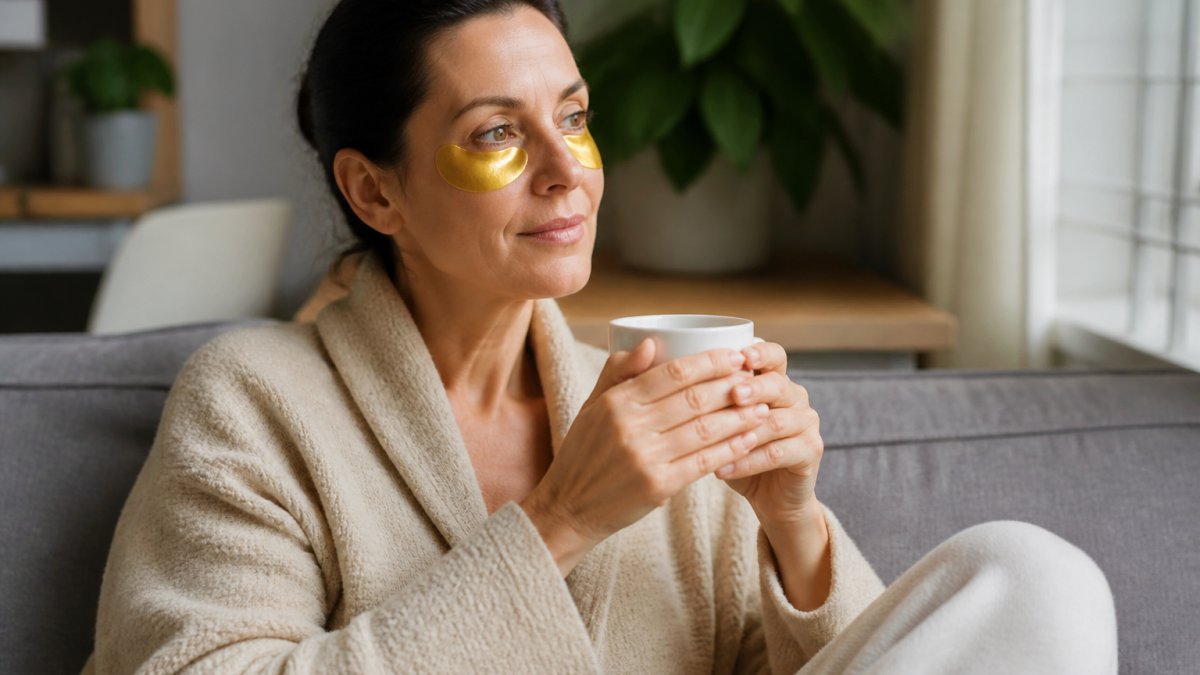
A few ground rules:
- Start with a clean, dry face
- Keep patches off your lash line
- Pat in the leftover serum, don't rinse
Our 24K Gold Eye Patches come in individually sealed pairs, so they stay fresh and travel well. The cooling feel helps calm puffiness while the formula hydrates and brightens the look of tired skin.
Diet, Makeup, and Clean Beauty: Angles Most Guides Skip
Most guides stop at cream and sleep. Three things move the needle just as much: what you eat, how you cover the problem while you fix it, and which formulas you choose so you don't create a new one.
Nutritional Triggers That Worsen Fluid Retention and Pigment
Salt is the big one: high-sodium meals push your body to hold water, and thin under-eye tissue shows it fast. Alcohol does the same while drying your skin and disrupting sleep, compounding the effect.
Other common triggers:
- Refined carbs and sugary snacks, blood sugar swings drive inflammation and water retention
- Very low water intake, your body holds onto fluid when dehydrated
- Late-night meals, lying down soon after eating slows fluid clearance
Small swaps help. Trade the evening chips for cucumber or melon. Add a glass of water between drinks. Keep a food-and-symptom note for two weeks; most people spot their own trigger faster than any generic list predicts.
Makeup Application Hacks for Coverage
Coverage is a skill, and the key is color correction first, then concealer, then minimal setting.
Step 1: Correct the color.
- Blue or purple circles: peach or orange corrector
- Brown circles: a slightly pink or salmon corrector
- Redness or broken vessels: green corrector, used sparingly
Step 2: Conceal.
- Apply concealer in a thin triangle pointing down toward the cheek, not a thick crescent
- Tap, never swipe, with a damp sponge or your ring finger
- Build in two thin layers rather than one heavy one
Step 3: Set selectively.
- Set only the inner corner and any crease-prone area with a light powder
- Skip heavy powder under the eye, it settles into fine lines and makes puffiness look worse
- A tiny amount of color-correcting powder can neutralize shine without adding texture
Quick fix for a puffy morning: chill a spoon or a gel mask in the fridge for five minutes, press it on for two, then apply corrector and concealer. The cold constricts vessels and the makeup goes on smoother.
Clean Beauty and Irritant-Aware Choices
For a clean beauty approach, look for fragrance-free formulas and short ingredient lists. Fewer irritants means less rubbing, and less rubbing means less pigment over time. A few practical filters:
- Fragrance-free beats "unscented," which can still contain masking fragrance
- Patch test new eye products on your inner forearm for two nights before using them near your eyes
- Avoid known irritants like high-concentration essential oils and denatured alcohol in eye-area products
Clean beauty isn't automatically gentler, but the irritant-aware approach is: choose formulas that respect the barrier, and your under-eyes will have less to recover from.
When to See a Dermatologist: In-Office Treatments for Dark Circles and Puffiness
See a dermatologist if your dark circles or puffiness are severe, one-sided, painful, or worsening, or if a good routine hasn't helped after about three months. Sudden swelling with pain or vision changes needs prompt care.
In-office options a dermatologist may discuss:
- Dermal fillers for hollow, sunken eyes
- Laser and light treatments for pigment and vessels
- Chemical peels with glycolic acid for pigmentary changes
These treat causes creams can't reach, but carry real risks and costs, so a board-certified dermatologist should guide the decision.
Conclusion: Your Tiered Plan for Brighter Eyes
Start with the free layer first. Sleep, water, less salt, and a cold compress each morning. Add the topical layer next: a hydrating eye cream daily and brightening ingredients for pigment.
That order matters. It saves money and it works.
At Sourir, we built our eye care line for exactly this kind of simple, repeatable routine. Our Hyaluronic Acid + Collagen Serum and 24K Gold Eye Patches are affordable, ship fast, and fit into a busy day.
Frequently Asked Questions
What causes puffy eyes in the morning?
Puffy eyes usually come from fluid retention that builds overnight. Lying flat lets fluid pool in the thin tissue around your eyes, and a high-sodium dinner or poor sleep makes it worse. A cold compress for 5-10 minutes constricts blood vessels and moves the fluid along, which is why it works so quickly. If puffiness lasts all day and never improves, that points to something a dermatologist should check.
How long should I leave under-eye masks on?
Most under-eye masks, including Sourir's 24K Gold Eye Patches, are designed for 15-20 minutes. Leaving them on longer does not add benefit; once the patch dries, it can pull moisture back out of your skin. Set a timer, remove them gently, then pat in the leftover serum rather than rinsing it off. Using them 2-3 times a week is plenty for most people.
What is the Vaseline under the eye trick, and does it work?
The trick involves applying a thin layer of petroleum jelly under the eyes before bed to lock in moisture. It can help with dryness and fine lines caused by dehydration, but it will not fade dark circles or reduce puffiness. If your concern is pigment or fluid retention, a targeted eye cream with collagen, hyaluronic acid, and niacinamide does more for the appearance of dark circles than an occlusive alone.
Can lifestyle changes really reduce under-eye puffiness?
Yes, for many people. Cutting sodium, sleeping with your head slightly elevated, drinking enough water, and getting 7-9 hours of sleep all reduce fluid retention around the eyes. Adding a cold compress and gentle lymphatic drainage massage in the morning helps move the fluid that does collect. If puffiness persists after a few weeks of these changes, it may be structural and worth a dermatologist visit.