

Melaleuca Alternative for Beauty: 2026 Clean Picks
Table of Contents
- Why Shoppers Look for a Melaleuca Alternative for Beauty Products
- Melaleuca Alternative Comparison: Four Everyday Beauty Picks
- Clean Beauty Brands Without MLM: What to Check Before You Buy
- Ingredients to Avoid in Beauty Products (and What to Use Instead)
- How to Transition to Clean Beauty Without Wasting Money
- How 'Natural' Labeling Is Regulated in the United States
- Frequently Asked Questions
Last Updated: September 14, 2026
Why Shoppers Look for a Melaleuca Alternative for Beauty Products
A melaleuca alternative matters because Melaleuca sells its beauty and wellness products through a membership model, which means you pay a fee before you can buy anything. Many shoppers find that arrangement frustrating when all they want is a straightforward tea tree cream or a bottle of castor oil. This guide from Sourir breaks down four everyday beauty picks that cover the same ground without a membership, a minimum order, or a sales pitch.

The brand name itself causes confusion. Melaleuca is the botanical genus that includes tea tree, the plant behind many of the company's best-known formulas. So when people search for a melaleuca alternative, they are usually looking for two things at once: tea tree-based products they can buy freely, and a retailer that does not require a subscription to shop.
Below, we compare four options by price, purpose, and who each one suits. None requires a membership.
Melaleuca Alternative Comparison: Four Everyday Beauty Picks
The four picks below cover feet, hair and skin, blemishes, and daily cleansing. Each one is available as a single purchase, so you can test before you commit to a routine.
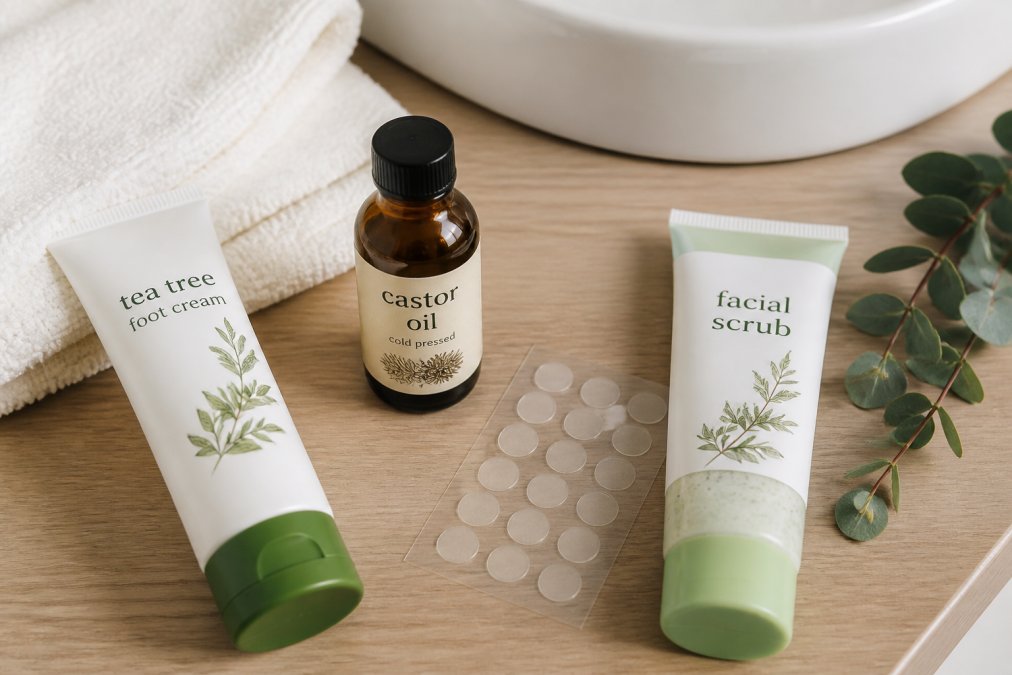
| Product | Price | Best For | Format |
|---|---|---|---|
| Tea Tree Foot Cream | $45.95 | Dry, cracked heels | 8 oz tube |
| Organic Castor Oil | $65.95 | Hair, skin, cuticles | 8 oz bottle |
| Invisible Pimple Patches | $25.85 | Single blemishes | 180-count pack |
| Neutrogena Acne Face Scrub | $18.95 | Daily cleansing | 4.2 oz tube |
Tea Tree Foot Cream for Dry, Cracked Feet
Tea tree is the ingredient most shoppers associate with Melaleuca, and this Tea Tree Foot Cream puts it to work where skin gets thickest. The formula pairs tea tree with aloe vera and mint, so it moisturizes rough heels while leaving a cool sensation after a shower or a long day on your feet.

The 8 oz container lasts through months of daily use, which matters if you are replacing a membership product you used to reorder. One honest limitation: it is a rich balm, so it takes a minute to absorb. Apply it before bed and wear socks if you want the fastest results.
Organic Castor Oil for Hair, Skin, and Cuticles
Castor oil is the quiet workhorse of a clean beauty shelf, and this Organic Castor Oil is cold-pressed and hexane-free. It conditions dry scalp and hair, softens cuticles, and handles any other patch of skin that needs moisture.
What most guides miss is how far a single bottle stretches. A few drops per use means an 8 oz bottle can last a year or more, which changes the math on the $65.95 price. The trade-off is texture: castor oil is thick, so start with less than you think you need.
Invisible Pimple Patches for Blemish Care
Hydrocolloid patches are the least glamorous product here and possibly the most useful. These Invisible Pimple Patches come in a 180-count pack with two sizes, and they work by absorbing fluid from a blemish while blocking the urge to pick at it.

They are drug-free and non-drying, which makes them a reasonable choice for skin sensitivity. Wear them overnight or during the day; they are thin enough to sit under makeup. At $25.85 for 180 patches, the per-use cost is low enough to keep a sheet in a travel bag.
Neutrogena Oil-Free Daily Acne Face Scrub
Not every pick has to be botanical. This Neutrogena Acne Face Scrub uses salicylic acid and gentle exfoliating particles to clear breakouts and unclog pores, and it does so without adding pore-clogging oils. At $18.95, it is the most affordable item on this list.
Worth knowing: salicylic acid can dry out skin if you overuse it. Follow the label, and cut back if irritation appears.
Clean Beauty Brands Without MLM: What to Check Before You Buy
Clean beauty brands without MLM structures sell products the same way any retailer does: you browse, you buy, you reorder only if you liked it. That single difference removes most of the friction people cite when they leave a membership model.
Before you buy, check three things:
- Can you purchase without joining anything? If checkout requires a sign-up fee, that is a membership, not a store.
- Is the ingredient list published before purchase? Reputable sellers list full ingredients on the product page.
- Is there a stated return path? A clear policy signals confidence in the product.
Sourir sells its beauty and self-care items as one-time purchases, with no membership requirement and no minimum order. That is the whole point of a melaleuca alternative: the same category of product, without the gatekeeping.
Ingredients to Avoid in Beauty Products (and What to Use Instead)
The ingredients to avoid in beauty products fall into a few practical groups rather than one villain list. What separates a useful guide from a scare list is the mechanism: why each ingredient is used, what it does to skin, and what a workable substitute actually does instead. Here is the ingredient-by-ingredient breakdown most brand-loyalty articles skip.
Synthetic fragrance (often listed as "fragrance" or "parfum"). A single label term can stand in for dozens of undeclared compounds, and fragrance is one of the most common triggers of contact dermatitis in cosmetics (pubmed.ncbi.nlm.nih.gov). The mechanism is straightforward: fragrance molecules are small enough to penetrate the outer skin layer and provoke an immune response in sensitized people. If you react, the fix is not "natural scent", botanical oils like lavender, citrus, and tea tree are themselves fragrance allergens. Look for "fragrance-free" (no added scent) rather than "unscented" (which may contain masking fragrance).
Sulfates (sodium lauryl sulfate, sodium laureth sulfate). These are surfactants, molecules with a water-loving head and an oil-loving tail, which is why they lift oil and create lather so effectively. The trade-off is that the same mechanism strips the skin's lipid barrier, leaving that tight, squeaky feeling. Sulfate-free cleansers use gentler surfactants (often glucosides or isethionates) that still remove oil but leave more of the barrier intact. They foam less; foam is not a measure of cleaning power.
Parabens (methylparaben, propylparaben, butylparaben). These are preservatives, and preservatives exist for a reason: an unpreserved water-based cream is a growth medium for bacteria and mold. Regulators permit parabens at set limits, and many buyers still choose paraben-free formulas. The practical substitute is a different preservative system, phenoxyethanol, sodium benzoate, or potassium sorbate, not the absence of preservation. A "preservative-free" water-based product is a red flag, not a selling point.
Drying alcohols (denatured alcohol, SD alcohol, isopropyl alcohol). These evaporate quickly and give a light, fast-drying finish, which is why they appear in toners and spot treatments. At high concentrations they disrupt the barrier and leave skin tight. The distinction that matters: fatty alcohols (cetyl, stearyl, cetearyl) are emollients, not drying agents, and they are not the problem. If a label lists denatured alcohol in the first five ingredients, treat it as a drying formula.
Phthalates (often hidden inside "fragrance"). These are plasticizers used to make fragrance last longer on skin. Because they can fall under the fragrance umbrella, they may not appear by name. The workaround is the same as for fragrance: choose products that disclose their full scent source or skip added scent entirely.
A quick substitution map:
- Synthetic fragrance → fragrance-free formulas, or single-note essential oils patch-tested first
- Sulfates → glucoside- or isethionate-based cleansers
- Parabens → phenoxyethanol, sodium benzoate, or potassium sorbate systems
- Drying alcohols → fatty alcohols (cetyl, stearyl, cetearyl) and emollients like castor oil or aloe vera
- Phthalates → fully disclosed fragrance or no fragrance
The useful question is not "natural or synthetic" but "what does this ingredient do, at what concentration, and is there a version I tolerate better?" That framing is what lets you evaluate any melaleuca alternative on the ingredient list rather than the marketing copy.
How to Transition to Clean Beauty Without Wasting Money
How to transition to clean beauty without wasting money comes down to one rule: replace products as they run out, not all at once. A full-shelf swap is how people end up with a cabinet of half-used bottles and a dented budget. But "go slow" is where most guides stop. The part they skip is the math and the decision criteria that make slow swapping actually cheaper.
Do the cost-per-use math before you buy. A $65.95 bottle of castor oil sounds expensive next to a $12 drugstore serum, until you divide it. At a few drops per use, an 8 oz bottle can last a year or more, which works out to pennies per application. The reverse is also true: a cheap cleanser you use twice a day and replace every six weeks can cost more per year than a pricier one that lasts four months. Compare cost per use, not sticker price.
Rank your products by skin contact time and frequency. The product sitting on your skin the longest, most often, is the one worth replacing first. That is usually a daily moisturizer or cleanser, not a rinse-off body wash. Rinse-off products have less opportunity to interact with your skin, so they are the lowest-priority swap.
Use a two-week test window per product. Introduce one new item, use it for two weeks, and note any change before adding the next. This is not just about safety, it is about attribution. If you swap five things at once and your skin improves, you have no idea which change did it, and you will rebuy all five. One at a time tells you exactly what earned its place.
Keep what works, even if it is not botanical. There is no rule that says every product must be plant-based. A salicylic acid scrub that clears your breakouts is doing its job; replacing it with a botanical scrub that does not work is a waste of money, not a clean-beauty win. The goal is a routine you can reorder, not a shelf that photographs well.
Read the label before the marketing. Ingredient transparency beats a "clean" badge every time. A product with a full ingredient list and specific claims ("cold-pressed," "hexane-free," "fragrance-free") tells you more than one with a leaf logo and the word "pure."
A practical order of operations:
- Start with the product you use most. If that is a daily cleanser, replace that first.
- Buy one item at a time. Test it for two weeks before adding anything else.
- Keep what works. No rule requires every product to be botanical.
- Read the label before the marketing. Ingredient transparency beats a "clean" badge.
- Reassess at the six-month mark. By then you will know which swaps stuck and which you regret.
This is the angle most guides miss. The transition is not a shopping spree, it is a slow, math-driven replacement cycle, and treating it that way is what keeps a melaleuca alternative affordable over a full year rather than just on the first order.
How 'Natural' Labeling Is Regulated in the United States
Here is the part most guides skip: the word "natural" has no single legal definition for cosmetics. The FDA's guidance on cosmetics labeling states that the agency has not defined "natural" for cosmetic products, and it does not review or approve cosmetics before they reach the market. The FTC's Green Guides cover environmental marketing claims and exist to stop companies from overstating how green a product is.
That gap is exactly where greenwashing lives. A brand can print "natural" on a label without meeting any standard, so the claim tells you almost nothing on its own.
What actually carries weight:
- A full ingredient list, in order of concentration
- Specific claims ("cold-pressed," "hexane-free," "fragrance-free") over vague ones ("pure," "clean")
- Certifications from named bodies, not in-house badges
When a label says "natural," treat it as marketing copy until the ingredient list backs it up. The same skepticism applies to any melaleuca alternative you consider, including the products above.
The real challenge with leaving a membership model is not finding products; it is finding them without a fee, a minimum order, or a sales call. Sourir stocks practical self-care essentials as one-time purchases, including tea tree foot cream for cracked heels, cold-pressed organic castor oil for hair and skin, and hydrocolloid pimple patches for blemish care, all with quick shipping and no membership required. Continue shopping at Sourir and build a routine you can actually reorder on your own terms.
Frequently Asked Questions
What are the best clean beauty alternatives to Melaleuca?
Look for brands that sell products directly without a membership or distributor requirement. A good Melaleuca alternative for beauty products focuses on plant-derived ingredients, clear labels, and simple pricing. Start with a few targeted items, such as a tea tree foot cream for dry heels, cold-pressed castor oil for hair and cuticles, or hydrocolloid patches for blemishes. Check the ingredient list for non-toxic formulas and avoid products that lean on synthetic fragrances or harsh chemicals.
How do I find clean beauty brands without MLM structures?
Check how the brand sells. If you must join as a distributor, pay a monthly fee, or recruit others to get the best price, it is a multi-level marketing model. Clean beauty brands without MLM sell straight to you at a listed price, publish full ingredient lists, and do not tie discounts to recruitment. Read the checkout page before buying: a normal cart and a flat price are the clearest signs.
Which ingredients should I avoid in beauty products?
Common ones to watch include synthetic fragrances, parabens, sulfates, and formaldehyde-releasing preservatives. These can irritate sensitive skin and weaken the skin barrier over time. If you have skin sensitivity, patch test new items on your inner arm first. Look for short, readable ingredient lists with botanical extracts, soothing agents, and natural preservatives instead. Hypoallergenic and dermatologist-tested labels help, but the full ingredient list tells you more.
How long does it take to see results after switching to clean beauty?
It depends on the product. A tea tree foot cream with aloe vera and mint can soften rough heels within a week of daily use. Castor oil adds moisture to hair, skin, and cuticles after a few applications. Hydrocolloid pimple patches work overnight by absorbing fluid from a blemish. For a full routine, give your skin barrier about four weeks before judging results. Introduce one product at a time so you know what is working.
Is 'natural' labeling on beauty products regulated?
In the United States, the FDA does not have a formal definition for the word 'natural' in cosmetics. That means brands can use it loosely, which is why greenwashing is common. The FDA does regulate safety and labeling claims, but 'natural' itself is not a certified standard. To judge a product, read the ingredient list, check for third-party certifications, and look for ingredient transparency rather than trusting the front label.